Showing posts with label Shooting Stock footage. Show all posts

Tuesday, December 4, 2012

10 Shots you Must have

For more information on shooting/selling stock footage check out my other posts:
GETTING STARTED
KEYWORDING
WHAT SELLS?
PUSHING TO THE NEXT LEVEL

In general, shooting stock footage has no rules, you can shoot what you want, when you want, how you want and make a good stream of passive income to help supplement your day-job earnings. However, there are some topics/shots that a stock footage portfolio is incomplete without. There are probably many more important shots, but here is my list of 10 shots. My hope is that this list will get you thinking about the variety in your portfolio. If you would like to view my example, click on the thumbnails to see my clip. Without further delay, here's the list.


Real dust particles flicker slow
1) - Unique Moving Background - a good motion background has big demand. There are tons out there so be unique.


Carnival Slide POV
2) - Something Rare - There is a great stock footage shot that only you can get because of your proximity, knowledge or access. Less competition is good.


skyscraper tower over fisheye
Skyscraper tower over fisheye
3) - Business Related - One of the top uses for stock is business presentation or corporate vids. Topic is saturated, but shoot something anyways. Good demand.


Candle Seamless Loop
4) - Health and Wellness Related - Another top... topic. Easy setups, good stills out there to emulate.


Los Angeles Night Traffic
5) - Your nearest major city - Make a day of shooting your "downtown." Lots to shoot. Think establishing shots, tourism, corporate, businessmen, night life, urban jungle.


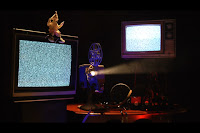
Analog TV Screens
Analog TV Screens
6) - Set up a scene at home - utilize lights, props, furniture, pets, heirlooms, antiques. You don't need a sound stage to set up a worthy scene. Just a little free time/creativity.


Motocross Jump
Motocross Jump
7) - Something you know really well - You are an expert at something. Shoot that in an authentic way. It will give your shot an advantage over posers who have less informed shots of your job/sport/hobby.


Toddler watermelon laugh
8) - A friend or family member emoting - People are hot. People showing emotions even hotter. If you can't hire an actor/sound stage then shoot someone you know. Usually they'll do it for free and sign the waivers.


Spooky Halloween Jack O Lantern
9) - A seasonal/occasion shot - Valentines Day, Birthday, Wedding, etc. - Tons of possibility here, the time for sales is narrow, but high volume.


unroll toilet paper frantic
10) - Something just for fun - shoot a wacky, off the wall subject really well, even if you think no one would buy it. You will have fun and I have been amazed what shots sell.


Whether you're starting out, or you're a seasoned vet, hopefully this list of "Must Have" shots will spur some fresh ideas that will help you improve your portfolio, and increase your ability to create passive income.
Happy Shooting, HDCineman

Saturday, November 17, 2012

Case Study - Business Trip to Calgary


For more information on shooting/selling stock footage check out my other posts:
GETTING STARTED
KEYWORDING
WHAT SELLS?

I've been traveling a lot lately working as an Editor for the UFC and I have come to find that it is easy to get inspired by new places. If you have a chance to travel, make sure you bring your camera and tripod along. If you can find a little time after your work, or sacrifice a few hours of sleep, then you have a unique opportunity to capture images in a place you may never otherwise get the chance to shoot.

I recently traveled to Calgary and was able to capture around 40 quality stock footage clips and time-lapses.  Fortunately I like walking and Calgary is very walker friendly.  I probably walked 25 miles to see the city from all angles.  It was an un-believably productive week.  Because, not only was I earning money from my edit job, but I walked away with a lot of great stock footage that will earn me money for years to come, plus I really had a great time exploring the city. It would have been easy to just hang out in my hotel room, or go out to a bar at night, but what are the long term benefits of THAT?

Here are a few of the spots I hit:

Downtown from Prince's Island Park - 

I walked a few blocks to a beautiful park that had some great scenic views of downtown Calgary, I love reflection shots.  Unfortunately it was a little hazy out this day, but it is still a nice daytime establishing shot of downtown Calgary.  I returned one evening to the same spot to shoot a night shot and there were beavers swimming all over the pond which made very interesting ripples in my night time lapse shot.


Peace Bridge - Calgary, Alberta, Canada

Peace Bridge -

This is the Peace Bridge from the north bank of the Bow River with the northwest end of downtown Calgary in the background. Normally it is good to find a frame with some good movement in it for a time lapse shot.  The river gives some nice movement, but it was still a little bland so I added a zoom in post.  That's one great thing about shooting time-lapse with a DSLR.  My Canon t2i shoots a 5K image so with a 1080p final frame size, I have lots of room to move around the frame in post without losing any quality.


Top Floor of the Westin Hotel in Calgary

High angle of downtown Calgary - 

The first thing I do whenever I'm in a new hotel is take the elevator up to the top floor to see what the view looks like.  The Westin in Calgary had a pool on the top floor with a panoramic view of the city, perfect for a midnight time lapse shot looking down on the city streets.


See this clip at Pond5

I always travel with a pretty light load of camera gear, I've found that I am a lot more likely to cary it with me if it isn't too much of a hassle; I'm also able to look less conspicuous in places like airports where I want to keep a low profile.  I can't imagine lugging a Sony F900 or a Panasonic Varicam or something through the airport, I'd get stopped in a heartbeat.

Moral of the story, SHOOT SHOOT SHOOT! you'll be glad you did.  You can have a lot of success shooting while you're traveling, it just takes a little extra effort.

Happy Shootin!
HDCineman

Sunday, September 16, 2012

Pushing to the next level


For more information on shooting/selling stock footage check out my other posts:
GETTING STARTED
KEYWORDING
WHAT SELLS?

No matter what level you are at with your stock footage business, if you are reading this blog you probably have the desire to push to the next level.

It is true of many things in life, and it has been very true in my experience with stock footage, that growth never happens in a straight line.  You will make progress, then you will plateau, then something will cause you to push through that plateau and on to the next level.  It can be extremely frustrating to be stuck at a plateau.  I will share some experiences from my personal stock footage business, and how I have broken through plateaus in the past.  I am confident that you will find something in my experience that will help you to push to the next level.


In 2007 I met a photography student who had some frustrating experiences with trying to sell stock photos on iStockphoto.com.  When he found out that I shot a lot of video, he said I should give it a shot, that they had just started excepting video and it payed way better.  That year, I decided to give it a shot and I posted a couple dozen shots of random things:


Let's call this  - Stage 1) GROWTH - I was hard at work shooting, processing, and posting.  I was putting time and effort into expanding my Stock Footage Library with no immediate rewards.  No one pays you to go out and shoot stock footage for your own stock footage business.  My rational was, "Well, if nothing else, it is good practice for my videography and I enjoy being outdoors and shooting things." however, after a couple months of this, I had pretty much fizzled out.


Stage 2) PLATEAU - I wasn't giving up, I just didn't have the energy to shoot anything new, and I wanted to see if there would be any payoff to all the work that I had put in. Even if it was a Dollar!  Then, in the beginning of June, I made my first sale for 23 cents profit.  It happened to be a still image of my Wife's Feet at the tide-pools (she was a girlfriend back then, so contrary to popular belief, shooting stock footage does not ruin your chance of having a successful relationship)...

It wasn't until August that I sold my first video clip, for a whopping profit of $2.00. These small deposits to my iStockphoto account meant nothing to my financial situation, however, they were the catalyst that helped me into Stage 3.

Stage 3) THE PUSH - With a new energy generated by a few dollars that materialized out of thin air and the hope and possibility they represented, I expanded my clip library from around 25 to 85 in a couple months. In the month of October, 2007 I earned $47.  All of a sudden, there was an amount of money each month that was measurable in real terms... $47 a month was about what my cable bill was.  So, I figured, well at least I'm getting free cable out of this deal.  What would it take for me to pay my rent??
This is a section of my crude google spreadsheet that I use for keeping track of my monthly stock footage sales. Notice that the monthly sales numbers aren't growing in a straight line, but they are obviously going up rapidly over time. 

"What If" thinking has really propelled me through some stock footage barriers and helped me come up with some creative ways to push to higher levels. After my push through the initial Plateau it was much easier to find energy to shoot, and I could see my sales going up each month.  I started the cycle again...

This 3 stage cycle will happen over and over again in your stock footage adventure.  You have to just accept it, enjoy the Growth, wade through the Plateaus, and look for the catalyst to create the Push to the next level.

The Catalyst is really the key to pushing your stock footage business to the next level.  The catalyst is the thing that gets you re-energized about your stock footage business. Below are some catalysts I used to break through the plateau:


  • Expanding to Multipul Outlets - I got to a point where I was working full time and didn't want to spend my weekends shooting new stuff.  It was the source of a major plateau for me in my stock footage business.  I finally figured out that if I expanded my stock footage sales to a lot more outlets (rather than just using iStockphoto), I could grow rapidly without going out to shoot a lot of new footage.  And the work I had to do to grow this way fit better with my schedule, I had to spend more time keywording, and I had to do a lot mor uploading.  I was able to leave my computer to upload before I left for work, or over night and I was able to do some keywording in between other activities.

    For me, each stock footage site is like a retail outlet.  I want my product in as many retail stores as possible, although non performing outlets will not get as much service as performing outlets.  Below are the outlets I choose to use for my stock footage business. It's a no-brainer to sign up, it's free, and only takes a few minutes.
  • Recording Audio - In order to mix things up a bit, I took a few months off of shooting video and bought a professional digital audio recorder to start recording audio sound effects.  It was refreshing to work with audio, I had a new curiosity and new subjects to start capturing in a brand new way.  The great thing about sound effects is that because they are inexpensive and there is high demand they sell more frequently than video.  It turned into a great catalyst because every time I logged into iStockphoto, I had a new sale.  Even if it is a small amount, that is energizing.  So if you are stuck, try mixing it up and shoot some stills, or record audio, or make some illustrations, whatever it takes to keep it fresh and keep you excited.
  • New camera - One big catalyst for me was buying a new camera. I shot with the Panasonic HVX200 for a long time (a fantastic camera), but I felt like technology was passing me up.  I loved the shallow depth-of-field look of the 5D and 7D cameras. Also, for brining the camera with me all the time, the size of a DSLR camera was much more convenient.  I feel that the most important part of your camera set-up is the lens so I chose the Canon t2i because it has the same image sensor and video functionality as the popular 7D, but it's half the price, that way I could couple it with my dream lens, the Canon 70-200mm f2.8, since then my collection of glass has grown.  But looking through that lens, the world looked so cinematic I wanted to shoot all the time, just to look through the lens.
Another great camera for shooting stock footage would be the Canon Cameras 5169B003 EOS Rebel T3i Digital SLR Camera with EF-S 18-55 Lens the main difference with the t3i is the nice flip out screen, it's particularly handy when shooting video.  But I don't mind crawling on the ground or laying on my back to get the shot I want.

  • Mathematics - Scaling up. Another very important catalyst for my stock footage business has been theoretical Math.  I keep close track of my monthly sales and if you like to write down numbers it is easy to sit with a calculator and get excited about the future prospects of your stock footage business.  Stock footage sales are consistant enough that you can do projections.  In 2009 I remember thinking, if I can consistently earn $500/month with about 400 clips, theoretically I could expand my clip library to 800 clips and consistently earn $1000/month.
    My actual stock footage earnings and 2012 estimated income.  Based on the size of your library and your average monthly sales you can figure out (on average) what your sales/clip should be. If I do $500/month in sales with 400 clips then my sales/clip each month is $1.25. That is a fun number to play with because it allows you to do predictions based on how many clips you think you can grow your portfolio to.
    Theoretically, if I shoot/upload 20 clips per day for a year, I will have 7,700 clips in my library. Which means I would be able to earn $9,625/month or $115,500/year.  That would replace many people's household income.  The obvious benefit of stock footage income over traditional income is that stock footage income is relatively passive.  Once your stock footage library is set up you earn money with very little work, you only have to put in significant time if you want to GROW your income.  Imagine a $115,000/year passive income... what kind of freedom would that give you in your personal life? or in your professional life? It is easy to get motivated if you are creative with a calculator.  Could you realistically shoot and upload 20 clips per day?  Probably not, but if you shoot for that, how far COULD you get?  Anyways, that kind of creativity with the calculator has helped me break through plateaus on more than one occasion.
Whether you are just starting out, or you are earning $10,000 a month, I hope this adds a few tools to your repertoire that will help push your stock footage business to the next level whatever that means for you.

Happy Shooting!
HDCineman


Tuesday, September 4, 2012

What should I shoot?


For more information on shooting/selling stock footage check out my other posts:
GETTING STARTED
KEYWORDING
WHAT SELLS?

What stock footage should I shoot?
The short answer is, shoot anything you want! That is what is so great about shooting stock footage, anything that you find interesting has the potential to make you some money.

IMPROMPTU INSPIRATIONS
In my experience the most successful shots have come almost by chance, I see something in day-to-day life that inspires me to capture the moment. I always have my camera with me and I always keep my eyes open for unique shooting opportunities. Unique in one of two ways, either something rare (not a lot of people can shoot it) or something unique in its aesthetics (looks really cool). All of a sudden something strikes me as unique so I pull over to the side of the road, or stop what I was doing and get my camera out.

Once I identify something I want to shoot I take some time with it. As long as its not a unicorn or leprechaun (in which case I'll whip the camera out and hit record) I will sit for a few minutes and think of the best way to shoot. Here's my mini checklist:
- what is the main subject?
- would the shot be better as a wide or close-up? Or both?
- what lens/focal length should I use?
- walk around a bit, what is the best angle to shoot from?
- is the shot "stock friendly?" (will I need to blur logos, get releases, etc.)
- are there multiple angles I could shoot and have different stock footage clips?
- would it be worth doing a time-lapse shot?
- is the lighting good or would it be way better at a different time?
- will I be able to stabilize the camera properly? (with tripod,on the ground, on a rock, etc.)
- is this shot worth shooting?
- are there other subjects here that I should shoot?

Sometimes I go through the list and realize that the shot would suck. So I don't shoot it, I move on.

CONCEPTUAL TARGETED ACQUISITIONS
Other times I will go out to shoot something specific. I usually set up shots in my home studio or go out with a topic in mind to a location I know I can get the shots. During these types of shoots I can decide ahead of time what my shots should look like, when I should shoot, what equipment I will need to shoot with, etc.

Example
Let's say I want to capture "relaxing at the beach." I have a unique opportunity to shoot this topic because I live near some of the most beautiful beaches in the world (Manhattan Beach, Huntington Beach, Santa Monica). I wouldn't say the beach is rare, but it isn't accessible to most stock footage producers like a freeway, or a kitchen might be.

I know around sunset I will be able to shoot some great silhouette shots that obscure people's faces and I know there are all kinds of subjects to shoot down at the beach along the topic of "relaxing at the beach" here are a couple of shots I have from the beach.

SHOOT ON DEMAND
Sometimes you can drum up some ideas for what to shoot by researching what topics are in demand.  So, how do you find out what topics are in demand?

Google it. One way to get some leads on what stock footage will be popular and translate to sales is to look for the "Top Searched Terms" on Google.  If you can generate footage that relates to the top Google searches then your footage is likely to get a lot more traffic which will translate to more sales per clip.

I found a list of "Top 5 most popular topics searched on Google" from a site called SEO Desk that have given me some ideas on topics to shoot.  The 5 topics from that list are:

1) Technology
2) World Events
3) Celebrities
4) Sports & National Events
5) Regional Results

Many of the obvious shots that would relate to these topics may not make good stock footage, however, if you are creative in the way you use this list and other information from the web you can come up with some successful stock shots and increase your sales.

These are some of the ways I go about coming up with ideas on what to shoot as stock footage.  Hopefully by sharing my thoughts you will have some new tools in your idea toolbox for the next time you go out shooting stock footage.

Happy Shooting!
HDCineman

Sunday, August 26, 2012

Quick Tip - Search for your clips!


For more information on shooting/selling stock footage check out my other posts:
GETTING STARTED
KEYWORDING
WHAT SELLS?

Shooting stock footage is a great way to have some supplemental income, but shooting the stock footage is only half the battle. A huge part of your stock footage business has to be dedicated to selling your footage. If you work to improve the visibility of your footage to potential buyers your stock footage income will increase dramatically. There are some very simple things you can do to improve your stock footage visibility.

Searching for your clips is a great way to make sure you have effective keywords, and to make sure that potential buyers will be able to find your clip.

Lets say for example you have and account with iStockphoto.com, you have uploaded a looping shot of 3 candles burning in a black void. Finally the clip has been accepted so you try searching the term candles to find your clip. Obviously if a buyer types in candles, the chances are they won't find your clip because there are a million shots of candles on iStockphoto.com. Try typing in something more specific and see if you can find the clip.

If I try typing in "Dark Looping Candles" then I am able to find my clip on the second page. Ideally you want to create keywords and search terms that will find your clip near the top of the first page. Which is sometimes easier said than done, nevertheless, searching for your clip is a great way to ensure that you are using effective keywords, and may help you come up with some keywords you hadn't thought of before. Most importantly, it ensures that a potential buyer will be able to find your clip. If you are able to type in a potential search term and find your clip then it is just a matter of time before the money finds you.

Happy Shooting!
HDCineman

Monday, August 20, 2012

DON'T WASTE FREE ADVERTISING SPACE!


For more information on shooting/selling stock footage check out my other posts:
GETTING STARTED
KEYWORDING
WHAT SELLS?

The best way to advertise your footage to potential buyers is to put some kind of link to your other clips in the description of every single one of your clips. Many stock footage sites allow you to use UBB Code (or some variation of it) to insert links and images into the description of your stock footage clips. Use that creatively to advertise your other clips. You will notice that many seasoned stock footage producers have several banner/links to similar clips, concepts, shots using the same model, etc.

A buyer that is ready to purchase a stock footage clip will often be looking for additional related clips, or even un-related clips. Bottom line is, they have money to spend on stock footage, and you have stock footage. If they can click on a banner that catches their eye, you can send them to a collection of your clips and you have the chance to make another sale. That is good.

As a default, I usually try to have a banner that links to a collection of some of my best clips. A banner that looks something like this:

For iStockphoto.com I attach this link:
Check out other high quality footage from HDCineman

Which leads to a collection of my favorite clips. (Feel free to go there and comment/rate some of my clips! I like getting feedback.)

For www.pond5.com they allow you to put links to a bin, and display a custom number of random thumbnails from the bin.

These are simple things you can do to increase your sales dramatically without even shooting any additional footage, take advantage of the free advertising space on each of your stock footage clips.

Happy Shooting!
HDCineman

Friday, January 13, 2012

Quick Tip - Polish your product!


For more information on shooting/selling stock footage check out my other posts:
GETTING STARTED
KEYWORDING
WHAT SELLS?

Stock footage calls for some emphasis on quantity over quality. Don't be afraid to post a clip that isn't the most stunning 15 seconds you've ever created. You never know exactly which clips will do well for you.

However, take extra time to polish clips that need it. Each clip in your library is a product that could potentially earn income for you for the next 10 years.

I recently shot a time lapse shot of a clock. I noticed that there was a logo in the middle of the clock that would probably get it rejected. I did a quick blur in After Effects to take out the logo. At that point I could technically post the clip, but I was unhappy with the clip when the minute hand crossed behind the blur. With this "polish" tip in mind I took the extra time to mask around the hand so that it would appear to pass over the blur. This gave the clip a much more natural look, and it avoids calling attention to the blur.


The process took some extra time, but time invested on the front end often pays dividends on the back end. Remember to polish your product and maximise you clip's potential to make you money.

Happy Shooting!
HDCineman

Wednesday, January 11, 2012

Quick Tip - Shooting on the go


For more information on shooting/selling stock footage check out my other posts:
GETTING STARTED
KEYWORDING
WHAT SELLS?

With a full time job and a family it can seem impossible to find time to shoot stock footage.

Sometimes it pays to be an opportunistic shooter. Always keep your camera and a good tripod with you and don't hesitate to whip it out if something interesting starts happening.

This morning a crew started running a wood chipper in front of my office. I quickly grabbed my t2i and got a shot.

It wasn't exactly art, but sometimes the most unlikely shot can turn into a cash cow.

Thursday, June 2, 2011

One of my Top Sellers

For more information on shooting/selling stock footage check out my other posts:
GETTING STARTED
KEYWORDING
WHAT SELLS?

My production friends are often skeptical about selling stock footage. When the topic comes up, I usually perk up, I love everything about shooting stock footage and I always love an opportunity to share some of my enthusiasm with friends. My best selling point for getting friends to give stock footage a shot is showing them a few of my top selling clips from iStockphoto.com.


After work one day in the parking lot I sat down in my Audi TT, took 30 seconds to frame up a shot of my shift knob and fired off a stock footage shot of me shifting gears.

On iStockphoto alone this shot has made me $744. (Keep in mind, that I also sell this same clip from 6 other stock footage sites, I'm just too lazy to do the math)

Not a bad supplement to my day's work with minimal effort. Every month that clip still averages 2 downloads or about $30/month, so the amount of money I got paid to shoot that clip goes up as time goes on.

Hypothetically, let's say that clip keeps pace for the next 5 years, at $30/month that would total $2544, for about 5 minutes of work.

People are amazed at how much money a simple shot can make over time. That is the key when you decide whether or not to take a few minutes to shoot some stock footage; look at the sales potential over time.

Shortly after shooting this clip, someone with a narrow view may see that after 3 months I hadn't made a penny and come to the conclusion that shooting stock footage just isn't worth the effort. Don't get discouraged, not every clip you shoot will turn into $744, or an extra $30/month, but some of them will, and over the long run, any time spent working on your stock footage library will pay off big.

Keep shooting, uploading and keywording. It pays off in the end, then it keeps paying, and pays some more.

If you haven't signed up for a stock footage account yet (whether you are a buyer or a seller) get started today and make sure to do it through one of my reference links. I highly recommend starting with Pond5.com
Royalty-Free Stock Video at Pond5


then when you expand, check out shutterstock.com and iStockphoto.com

Happy Shooting!
HDCineman

Saturday, April 16, 2011

Exclusivity vs. NON-Exclusive


For more information on shooting/selling stock footage check out my other posts:
GETTING STARTED
KEYWORDING
WHAT SELLS?

Should you be Exclusive with one stock footage website or should you be non-exclusive and post your footage to many sites?

I want to offer some different scenarios that make sense in regards to Exclusivity; the scenario that makes the most sense for you will depend on who you are, and what your reasons are for shooting stock footage.


Scene #1 - You are Exclusive with iStockphoto.com. iStockphoto is really THE premiere royalty free stock footage site currently. If you choose to be exclusive, do it with iStockphoto. To see the full benefits of being exclusive with them go to their Exclusive Program Page

If spreadsheets, data entry and business managent scares you and you want to spend the majority of your time shooting then exclusivity makes good sense, at least when you are starting out. If you choose to only sell through one website then it is not vital to keep records of all your keywords and descriptions, and theoretically you could rely on iStockphoto (or whoever) to keep all of your footage backed up on their hard drives, as long as you don't plan to use your own footage or sell it anywhere else. If I were exclusive, I would still choose to keep proper records and back-ups incase I changed my mind, or iStockphoto went out of business or something. (see my posting on Organization)

To make the most of being exclusive, you have to be shooting constantly, and really focus on shooting high-quality, unique footage. Always have something in the queue (iStockphoto takes about a month to review footage before they post it for sale). Ideally a few new clips of your footage would be accepted every day. New exclusive footage gets posted to the "New Footage" Section of iStockphoto and it gives your entire library more exposure, and potential to sell.

Also, be active on the iStockphoto website. Comment on other people's clips, write in the message boards, make friends with other contributors. Build/organize "light boxes" of your footage.

The downside of being Exclusive is that, in most cases, you do not have as much potential income. It would be the equivalent of being in a band and selling your CDs at one record store. Even if it is the best record store, they have a limited number of customers that shop at their store. Even if they put your CD in the front window of the store, and they give you a bigger percentage of the sales you just won't have as many sales as you could if you distributed your CD to 100 different record stores. Now if you were creative/driven enough to come out with 100 CDs, and they were really good, then you could create a loyal fan base, and the customers would buy ALL of your CDs, you could make good income, and no one would ever call you a sell-out.

In summary, if you are more of a purist, you don't need to make the most money possible, and you want to focus on shooting footage... Give exclusivity a shot. If you don't like it, you can change your mind down the road.


Scene #2 - You are NON-Exclusive and you post you footage library to multipul stock footage sites.

There are 4-5 good stock footage sites that sell consistently, and 40-50 that sell next to nothing. If you choose to be NON-Exclusive you want to sell footage through as many GOOD stock footage sites as possible, and maybe test the waters in a few up-and-coming stock footage sites. The stock footage world is dynamic, a new stock footage website could start up today, and in a year they could dwarf all the other sites. It's good to keep your eyes open, and try new sites out once in a while.

To make the most out of being NON-Exclusive you should really think of your stock footage as a business and you should constantly be uploading/keywording footage. Organization/record keeping is VITAL (see my post on organization) Where an Exclusive stock footage producer just needs to upload each of their clips 1 time, a non-exclusive producer will never be done uploading, the more uploading, the more potential sales. I upload footage to the best selling sites first, then work my way down the list. If I ever have 100% of my library uploaded to all sites, then I'll open an account with a new stock footage site and test the waters.

The reasons for being non-exclusive, besides having more potential income, is that you can get more mileage out of your library, the income is more consistant/predictable, and there are an infinite number of different ways to increase your monthly income besides just shooting more footage. I have a demanding career in Post Production right now so I don't get to shoot as much as I'd like. Being non-exclusive, I can leave a bunch of clips uploading at home before I leave for work in the morning. I can keyword a few clips on my lunch break, or a few here or there in the evenings. With an organized keyword/descriptions database I can even recruit other people (employees) to help me get more clips online, and increase my monthly income.

This is a "Sell Out" method of selling stock footage, but that is what stock footage is all about. I have no shame putting my cd in as many record stores as possible, there are a lot of people in the world that need to hear my music.

In summary, if you are organized, somewhat business savvy, don't mind a little data entry work, and you are driven to get the most money possible out of your stock footage then NON-Exclusive is the way to go.


Scene #3
An alternative method would be to shoot different footage for different sites. You could be exclusive with multipul sites, and divide your library in such a way that the best clips go to the site that sells the most... or to the site that pays the highest royalties.

There is a faction of stock footage contributors that believe you will maximize your sales with fewer clips in your portfolio, clips that are the highest quality, and that have a common theme. The theory is that when a potential buyer finds one of your clips, they will be able to look through your entire portfolio and find other related clips to buy.

Whatever you do, don't claim that you are exclusive and post the same footage to multipul sites, you will get caught. Play it straight and karma will reward you. Another thing to be aware of is that you can even get in trouble for posting "exclusive" footage to Vimeo, vimeo has a clause in their user agreement that says something like, "Vimeo can re-distribute anything you post." That will violate most exclusivity agreements.

Final Thoughts:
This information WILL help you to make more money selling stock footage. When you understand what you want your stock footage business to be, you can better understand where to focus your limited time and energy. Thank you for reading, and I will be sure to include more pictures in the next post.

Happy Shooting!
HDCineman

Monday, April 11, 2011

Case Study - Classic Car Shoot


For more information on shooting/selling stock footage check out my other posts:
GETTING STARTED
KEYWORDING
WHAT SELLS?

I am always keeping my eye open for an opportunity to shoot something unique. My father in law has a completely restored 1940 Ford that I have been wanting to shoot for some time. He is a little bit protective of his car so I had some reservations about asking, but when I did he was excited to get the car out and take it for a spin. It reminded me that people with a unique hobby or interest are often eager to share, all you have to do is ask.

I could have planned better for this shoot. I only had one thought-out shot in my mind, a classic 40 Ford crusin around some s-turns up in the hills. I had a general idea of where I wanted to go for that. Then I had a bunch of still shots in my brain of close ups on the chrome bumper, the wheels, hubcaps, taillights. Shooting out of the back of another car leading the Ford down a windy road. Something through the side or rear-view mirror. Out of laziness I figured that I had limited time, and I should just concentrate on getting 1 or 2 useful shots.

Here's the gear I brought with me:

Canon t2i (550D) - $650 - This camera has the same censor as the popular Canon 7D (about $1500), the t2i's construction is a little lighter, it feels a little bit like a toy, but I just want to be able to shoot the 5184 X 3456 raw still images for time-lapse, I want to shoot shallow depth of field, I want to shoot HD 1080p, and I want to be able to shoot 60fps slow-motion. This camera has what I need, so I saved on the camera body to be able to buy the more expensive glass.


Canon EF 70-200mm f2.8 with image stabilizer - $2300
For high quality images, the most important part of your set up is your lens. You can have the biggest sensor in the world, but your lens is what projects the image of the world onto that sensor and a low quality lens will limit the actual resolution of your images. This lens is the best in its class, and a standard for many professional photographers. f2.8 allows you to shoot in fairly dim conditions for a long lens, and can give you an extremely shallow depth of field. The icing on the cake with this lens for Video is the image stabilizer, many pro-sumer video cameras have image stabilization built in, but DSLR's do not and an unstable image is unusable for stock footage. I try to ALWAYS use a tripod, however, there are many times when a tripod is not practical, the stabilizer makes a world of difference. Especially since longer lenses magnify any small movements you make with your unsteady hand. And your hand is unsteady, I guarantee it.

Canon EF-S 18-55mm f3.5 - $70 - Sometimes you have to sacrifice quality for budget constraints, I purchased this lens to allow me to shoot in the wide/normal range, it is not ideal. The Canon DSLR is a new setup for me, so I will be purchasing a few more pieces as I go along. For now, this will do.

Sachtler DV2 Sticks - $500 used - for stock footage a good fluid-head tripod is vital. For the casual hobbiest, a large tripod is inconvenient, and annoying to cary around. Anyone who is serious about stock footage will find that any temporary inconvenience a good set of sticks causes pays off when you get your footage home.


The Shoot
I was glad I didn't have any more equipment. With just 1 small bench seat, and a father in law that is damn near 7ft tall, I was happy that all my camera equipment fit in a small camera bag, and my sticks could lay in the seat between us. Less equipment is a little more casual and it also draws less attention on the side of a road from authority figures that might cut your shoot short.

As we headed toward the canyon, we chatted for a while then I pulled my camera out to make sure I had my settings right. I wanted to shoot HD 1080 (the highest quality video that the t2i shoots), I put on my wide lens, made sure it was clean, I checked the exposure in sun, and as we went through shadows. I rolled 20 seconds through the front windshield. Primarily to test that everything was working correctly, but I always try to shoot something that could be useful.
The shot was very shaky, but there was a nice moment when we passed a 40mph sign on the road, I'm not sure if anyone would make the connection that this was a 1940 Ford, and it said 40 on the road, but sometimes those little coincidences get people excited about the footage and it can turn into a big seller. Symbolism sells. I may try to run an image stabilizer on this footage, you never know exactly what will sell, so when in doubt, try it out.

We finally got to a spot on the west side of a hill that still had some good light on it. I jumped out on the side of the road and told my father-in-law that we could communicate by phone and I'd have him do a few passes up and down the hill so I could grab a couple different shots. With just a small bag and a tripod "guerrilla" shooting is pretty easy. The legality is questionable... technically you are supposed to have a shooting permit in most cities. It is a little bit dangerous to be hanging out on the side of a road and anything dangerous is generally frowned upon by local law enforcement. But it's not like I'm writing graffiti or something, just taking pictures.

I had a specific shot I wanted to get, but I made sure to find a shot as the car drove off to turn around.

I am always looking for shots besides the one I have planned, sometimes the best shots are impromptu. In between passes, I would run down the road a ways to change my shot up. I always strive to get quality shots, but the BUSINESS of stock footage is about quantity as much as quality, so the more usable shots the better.

One time while I was waiting for the car to turn around I noticed that a purple thistle flower and some yellow wild flowers were nicely backlit by the setting sun, and they lined up pretty well for a rack focus.
Although flowers are way over shot, I had nothing better to do in that moment. Purple and yellow happen to be complementary colors, and an interesting rack focus between the contrasting plants made for a decent supplemental shot. It also gave me an idea to rack focus from the thistle to the car as another variation on my main subject shot, it was also a good way to utilize a key feature of the t2i/70-200mm combo, the shallow depth of field gave the shot a more cinematic look.

We shot for about 45 minutes, and I probably got 4-5 shots that I was happy with, that is a pretty good day.

There were probably 100 more shots to shoot, and if I were out on my own I could have easily spent 4-5 hours with that car. I decided to save those shots for another day. I was happy to knock out a few shots, have a little fun with the father-in-law and have some fresh footage for my stock library.

As a bonus, we stopped to fill up with gas on the way home. Never missing an opportunity, I had him hold on for just a second, I quickly jumped out and framed up a shot, gassing up the 1940 Ford. To be honest, I have a feeling that the impromptu "gassing up" shot will probably end up being my best seller. It would have been easy at the end of the day to just let that one go, it ended up looking pretty nice. But who knows? The true test is when you get the footage on line and let the buyers decide.

The next step is to process these clips. In Final Cut Pro, I have selected the clips I think are the best, they were a little short so I combined two short shots into a mini-sequence to give the buyer a little more bang for their buck. There will be a coming and going shot combined in to one clip. Then I will use my thistle rack focus shot, a stand-alone wide angle shot of the 40 Ford going by, and a shot gassing up.

I trimmed the clips to be just the best part of each shot, I made sure the clips were longer than 5 seconds but less than 30 seconds. I will do some minor color correction then I will convert the shots to 1080X1920 HD, square pixels, with a Photo Jpeg Compression (for progressive scan shots) and save them into my library. The shots will be organized into my "Transportation" sub-folder and the file names will be something like, "TRN-0063 Classic Car Fillup.mov"

Next step is to plug each clip's info into my Google Doc Database (See my post on Stock Footage Organization)

Then I'm ready to upload the clips to iStockPhoto, Pond5, Shutterstock and a few others.

That's my process, for a Saturday afternoon stock footage shoot. Next, I wait for the $$$ start rolling in after a few months, and before too long my unpaid day of fun with the father-in-law turns into a healthy payout that just keeps coming year after year, and maybe if we're lucky we'll get to see the 40 Ford in the title sequence of some street rod restoration documentary.

Thanks for reading, Happy Shooting!
HDCineman

Tuesday, April 5, 2011

Stock Footage Organization


For more information on shooting/selling stock footage check out my other posts:
GETTING STARTED
KEYWORDING
WHAT SELLS?

In this post I want to offer some stock footage organization tips. I can only share what has worked best in my experience, there are probably other ways to do things and ultimately you have to do what works best for you. Even if you start off with a small library of stock footage you will want to have some way of keeping it organized, accessible, and safe.

Organization
A simple database will do wonders for your organization, I use a Google doc spreadsheet because it is free, and I can access it anywhere there is internet. Here is what my doc looks like.


Clip ID - The clip ID# contains the category code followed by 4 numbers to signify which clip number it is. AML-0036 is the 36th clip in my Animals category.

File Name - This is the actual file name I use for the clip that is stored on a hard drive. It is the Clip ID followed by a more descriptive clip name.

Description - This field contains a description of the clip. Whenever I upload a new stock footage clip I copy the description and paste it into this field for each clip. When I decide to upload that same clip to another stock footage site I don't have to re-write the description each time. It is best to keep the description fairly short because some stock footage sites limit the length of the description to 200 characters.

Keywords - I copy keywords into this field. It is best to separate your keywords/phrases by commas. Although it is best to have as many legitimate keywords as you can think of, many sites limit keywords to 50.

The above database fields are the MOST useful for organizing and reusing your stock footage library. I decided to keep a few additional columns of information that I have found useful.

Formats - I keep the video format to describe whether the highest quality clip I have is Standard or High Definition video, and whether it is HD 1080, 720 or if the clip is available in 2K or 4K resolution. I could probably include the codec/compression as well, but I have chose not to so far.

Rating - I give my clips a quick rating on a scale from 1-10. Not every clip you sell has to be AMAZING, if I only posted my 30 most amazing clips I would probably have 1/10th the monthly income from my stock footage library. To be frank, some of my footage embarrasses me as an artist; As a business man, if the clip produces some income then it ads value to the business and has a place in my stock footage library. I still find it useful to keep track of the best clips. I will spend more time keywording/describing those clips, I will use those clips for advertising purposes, or if someone needs a quick sample of my library I will be sure to put my best foot forward.

Storage Location - This will become very important as your library expands. Basically it describes what drive a clip is located on.

Accessibility - You want to have easy access to your footage. I end up using a lot of my own footage for different projects, or sometimes a friend or business acquaintance will ask if I have a specific clip they can purchase. I could just tell them to go on line to iStockphoto/hdcineman and check out my portfolio. But I would rather have 100% of the purchase price, and I certainly don't want to buy my own clip for personal use.

If you can afford a high-end redundant raid drive system... more power to you. That is probably the safest way to store your stock footage library. I try to keep very low overhead with my stock footage business to maximize my profits. I have found that using an ICY Dock and plain ol' sata harddrives is a fantastic, inexpensive system.

Harddrives are cheap and the Icy Dock allows easy access to drives. I buy 2 drives each year a primary drive and a back up. All the footage I shoot/process in a year I put on a drive organized into separate folders based on media type (VIDEO, AUDIO, ILLUSTRATION) and then by category code (AML = Animal, BUS = Business, TRN = Transportation, etc.) I can easily search for clips by opening a category folder and scanning through, or I can use spotlight on my Mac (or search function on PC) to find a specific clip.

An additional tool I have found useful is Adobe Bridge, this was developed more for photography, but it works well for video as well. I don't like the way it keeps keywords, but if you have access to it you may find it useful. I use it when I am up loading footage to a new stock footage site to help manage which clips I have uploaded to which site. If you are uploading via FTP you can drag clips directly from the Bridge window into the FTP program.

Safety - It is important copy all your footage to a second back-up drive incase the primary drive fails. Also, if you're using the yearly drive system, you should plug the primary and back-up drives in periodically and check the media. Then every few years you should move old footage to new drives. The value of your footage will outlast any harddrive.

I know organization isn't as exciting as getting out there and shooting new footage, but when you start to see the earning power of your footage increase tenfold because you are organized you will be glad you took this information to heart.

Happy Shooting!
HDCineman

Friday, March 25, 2011

What stock footage sells TODAY?

So far I have tried to post some stuff about the surface level basics of shooting stock footage. I want to write a quick blurb about the thought process behind what sells, and some of the different angles you can approach shooting stock footage from that may improve your chances of success as a Stock Footage producer.

Stock footage has evolved, there are too many “standard” stock footage shots. Everyone already has access to them. How many times have you seen a time lapse sunset shot, a close up of a water drop in slow motion making waves? An abstract of waves rippling on a lake? A colorful blurred abstract background? A close-up of beautiful flower blowing gently in a summer breeze?

Historically, stock footage has been all about shooting VERY generic, standard shots in standard categories to create an all incompassing "Stock Footage Library." A production company would purchase the library to cover all of their stock footage needs. The licensing fees for using clips from these stock footage libraries was quite expensive and usually kept small independent producers away from purchasing the footage. Things have changed, and there is a MUCH larger pool of producers that need stock footage for music videos, websites, webisodes, commercials, indy films, student films, live events etc. but they aren't willing to purchase large libraries, and they are using stock footage to save money on their productions. And they usually have much more specialized or specific needs.

With the onset of micro-sites your stock footage is available to the entire world, shoot something unique, special, impressive, difficult to shoot, or creative and you will do very well. There still is a market for the standard, tried and true subject matter, but you better have a studio, high end camera equipment and lights, hire professional actors/models and have some experience shooting professional film or video. A popular topics that comes to mind is:

Business People - Meetings, making deals, on the phone, on a computer, working together, etc. Businesses put together video presentations all the time for marketing purposes, conventions, sales meetings, etc. They use them on websites, in power point presentations etc. That is a good target market because they don’t like to go and hire camera crews to shoot a 3 minute sales meeting video.

I’m not discouraging shooting this kind of footage, but starting out, it is much more rewarding to sell your unique eye to the world.

Here is an example of a unique shot that has done well for me.


I was able to get my HVX200 into the LA County Fair and shoot this POV shot as I slid down a colorful slide. I didn't have to hire any actors, rent a studio, lights, or production assistants. As of this posting, "Carnival Slide POV" has made me $542 from istockphoto.com sales. It consistently sells (on average) about once every month. That's not a bad trip to the County Fair! I'd say I covered my entrance fee and the $2 to go on the slide.

Find something unique to shoot... it doesn't always have to be a big production. Just watch out for recognizable faces, logos, or other things that will get your clip rejected.

Happy Shooting
HDCineman

Thursday, March 10, 2011

Keywording Stock Footage

Keywording is the single most important factor in getting potential buyers to find your clip. Having great footage is good, but if no one can find it you will never get any sales. Take the time to write out very thoughtful keywords for your clips.

If you are foggy on how a keyword works, a keyword is a word or phrase that describes your clip. This word or phrase is something that a customer would type into a search box to try and find a clip that they want to buy. As a footage producer, you have no idea who will need your clip or what they will use it for, but you have to make your best guess at what a customer might type in that search box to get them to find your clip, and hopefully purchase it.

Look at your clip and type all the different keywords that describe your clip. Put yourself in the position of different customers that may want to purchase your clip, what would you type in to find your clip? Say you are putting together a short video promoting Los Angeles tourism, maybe you would type in the words, "Los Angeles Beach Scenics". Maybe you are doing an art piece and are looking for a bunch of different clips that are orange. Maybe you are a cinematography teacher and you want to illustrate the term "silhouette" or "color gradient" The more scenarios you can come up with, the more relavent keywords you will come up with, and the more sales you will make.

When you are first learning to keyword the best thing you can do is copy someone else's keywords. If you have a shot of a surfer at sunset, do a search for "sunset surfer" find the clip that is similar to yours and has the MOST downloads. There will probably be a lot of keywords on there that you didn't think of. There is a fantastic site I've recently started using http://www.findphotokeywords.com/. This site allows you to search for clips that match yours on Shutterstock, iStockphoto, Dreamstime, and Getty Images. Then you can extract keywords from those sites. Great tool!

Another good tool for some clips is wikipedia, when you type the subject of your clip into wikipedia you will get a wealth of information that could be useful for your keywords. Especially for shots of animals, objects or landmarks.


Here are the keywords I would use for the sunset surfer clip:
surfer, surf, surfboard, sunset, beach, wave, warm, California, establishing shot, silhouette, short board, Los Angeles, LA, Manhattan Beach, beach, ocean, water, recreation, sport, extreme, sports, relaxation, skill, balance, exercise, man, carve, ride, summertime, summer, outdoors, orange

Do your keywords right the first time, sometimes it is tempting to just get all your footage up as fast as possible with the intention of coming back and improving your keywords... That can grow into a daunting task as your library grows and you will be missing out on sales opportunities.

Happy Shooting!
HDCineman